How young students have awoken Serbia
)
Serbian students crossed the country by foot.
© Lazar Novaković
Serbian students crossed the country by foot.
© Lazar Novaković
Ana Dekoning
18 February 2026 • 16 minutes reading time
After thirteen years of corruption, a new generation of Serbs is rising up against the status quo. For more than a year, students have been putting their education at risk to fight for their future. While showing society how things can be different, they are rebuilding the bridges that the previous generation destroyed.
‘Thank you for showing interest in us’, Milica (22) says right before we hang up the phone. ‘When there were protests in France, we knew in Serbia what was going on. Why can’t it be the same the other way around?’
While Serbs have continued to fight against an autocratic regime over the past year, support from the European Union has been limited to words. Apart from a resolution by the European Parliament in October 2024, no concrete steps, such as sanctions or the suspension of accession talks, have been taken.
This is striking, because their struggle for democracy and the rule of law is perfectly in line with the values that the Union claims to uphold. For Milica and many other Serbs, this is proof that European leaders consider stability in the region more important than their democratic values.
However, what is happening in Serbia today extends beyond its borders. In a world where more and more leaders are undermining the rule of law, a young generation is demonstrating the power of bottom-up resistance. They are non-violent, leaderless and refuse to settle for anything less than a future in which everyone is equal before the law.
Their resistance has inspired all levels of society. On 15 March 2025, an estimated 300,000 to 400,000 people took to the streets, marking it the largest protest in Serbian history.
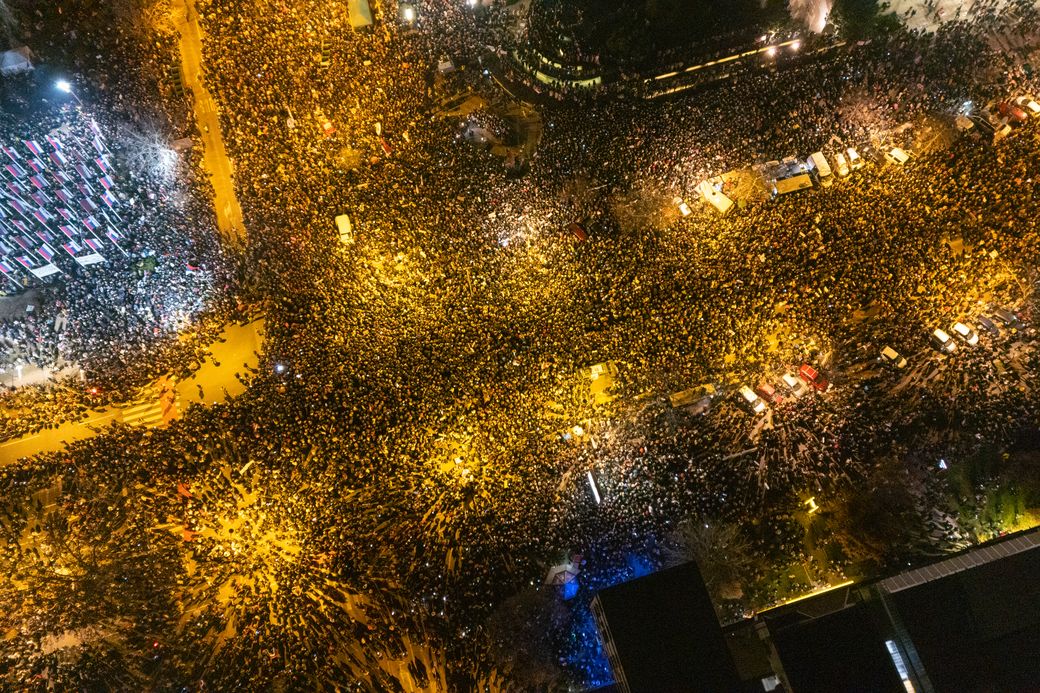
A drone shot during one of the first large protests in Novi Sad on the 1st of February 2025.
© Lazar Novaković
But as student Ljubinka notes, ‘the greatest success are not the numbers, but the awakening of a previously numb society.’ She calls the creation of solidarity and sense of community among the people one of the biggest successes.
President Aleksandar Vučić accuses the students of being controlled by foreign powers that want to destabilize Serbia. But according to Ljubinka, nothing could be further from the truth. 'Everything about this movement, from organization to communication and perseverance, has been shaped by previous struggles unique to the Balkans. It is deeply rooted in our own historical and social experience.’
The straw that broke the camel's back
On the 1st of November 2024 at 11:52 a.m., a canopy collapsed at the newly renovated train station in Novi Sad, Serbia's second largest city. Sixteen people, including four children, lost their lives.
‘We can no longer ignore the fact that the regime and its policies present a danger to ordinary citizens.'
The accident sent shock waves through the country, as people realized once again that “corruption really kills”, says Maja Bjeloš. She is a political scientist and researcher at the Belgrade Center for Security Policy, and an activist herself.
'When unfit people occupy positions of power, the result is that all public services are of poor quality. We can no longer ignore the fact that the regime and its policies present a danger to ordinary citizens.'
Although the canopy fall sparked the new wave of protests, there has been a breeding ground for discontent in Serbia for a long time. Since 2016, there have been continuous protests against corruption and abuse of power by Vučić and his Serbian Progressive Party (SNS).
‘During all these protests, however, the government refuses to take responsibility’, continues Bjeloš. ‘Meanwhile, they are working tirelessly to dismantle democratic institutions.’
According to Strahinja Subotić, a senior researcher at the European Policy Center in Belgrade, the protests did not happen overnight, but ‘were fueled by the government itself through its use of violence against students’. That violence was perpetrated either by the government services themselves or by SNS supporters who went unpunished.
When the police failed to take sufficient action after students from the faculty of Dramatic Arts were attacked by masked SNS supporters during a peaceful demonstration, the students had had enough. They blockaded their faculty, and soon nearly all eighty faculties in Serbia followed in solidarity.
The democratic decline under Vučić
Since president Aleksandar Vučić and his Serbian Progressive Party (SNS) came to power in 2012, democracy and the rule of law in Serbia have steadily declined.
According to the Clingendael Institute, the SNS gradually expanded its power to virtually all areas of society by rewarding party members with key positions. This not only secured loyal supporters, but also gave the party far-reaching control over the media and public administration.
As a result, Freedom House no longer classifies the country as free or as a democracy. Instead, it labels Serbia as “partly free” and as a hybrid regime, combining both democratic and autocratic elements.
A different kind of democracy
After that, the university buildings were used to experiment with a different kind of democracy. In a short period of time, they grew from a loose mobilization into a highly coordinated movement.
They organized plenary meetings, where decisions were made by majority vote after extensive discussions. The moderators who lead the meetings are re-elected each time, ‘to maintain equality’, Milica explains. ‘The philosophy is that there is no single leader, but that we are all leaders in this fight.’
Not only does the movement have no internal leader, it also has no public face. During public debates, for example, several speakers are delegated, who take turns speaking. Their name cards list faculties rather than names.
‘A strategy that works,’ according to Subotić, ‘because the regime is unable to apply its traditional tactics’. In previous protests, the leaders were deliberately targeted by smear campaigns or co-opted by the regime.
In addition, they refuse to engage in direct debate with Vučić: formally, he does not have the authority to grant their demands, even though he behaves as if he does. In this way, they reject the personification of power and emphasise the importance of institutions and legal procedures.
Their choice of a leaderless model centered on citizen consultation is not without reason. It is a conscious break with a political system in which a president has seized all power. ‘Leaderless decision-making is in itself a symbol of resistance’, Subotić concludes.
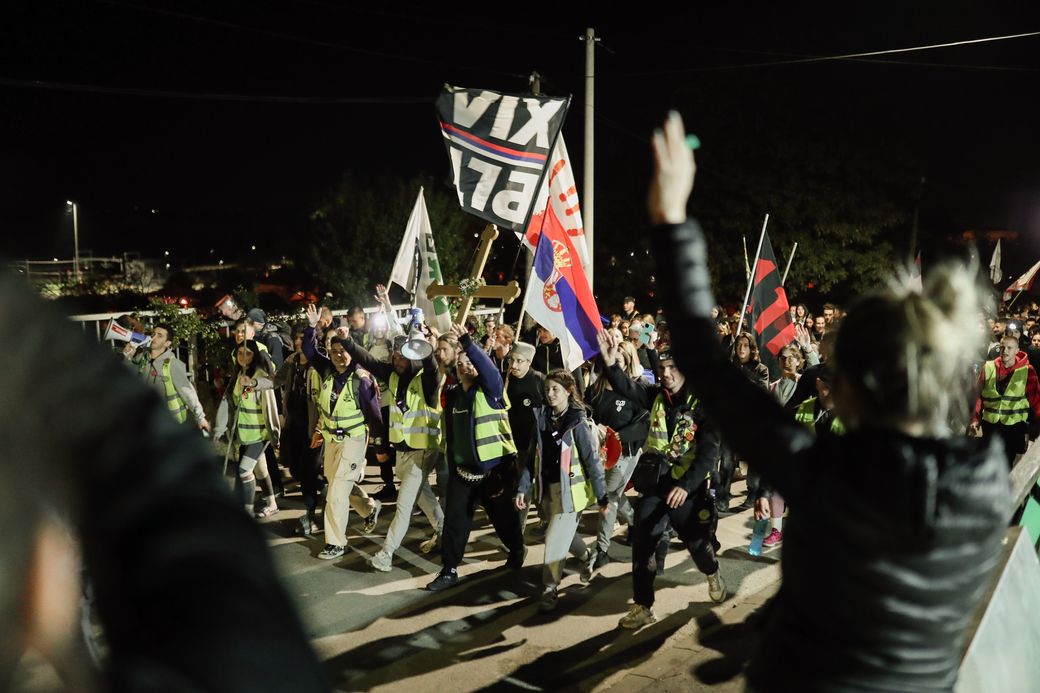
© Lazar Novaković
United but different
By focusing on restoring the rule of law and democratic institutions, the movement has brought together groups that would otherwise rarely align. ‘These are common interests that transcend political convictions’, Subotić explains.
‘There is this joke where people ask, “Who is the admin today?”’ Bjeloš says. ‘Because the admins of social media accounts gets constantly changed. Sometimes they are very liberal, sometimes they are not.’
This results sometimes in posts that use derogatory terms for Albanians or LGBTQ-people. ‘Immediately after posts like this, there is a lot of backlash. People argue that they do not want to fight the regime using this kind of rhetoric and that they do not want to live in a society that discriminates people based on these things. Still, we have to remind ourselves that not everyone in our society is socially progressive and liberal. There is a lot of nationalism too.’
‘I’m telling you this to show that the student movement is not monolithic. However, they engage with each other and learn from their mistakes.’ Despite the political divisions, internal cohesion remains intact because everyone respects the final decision. ‘We know better than to divide ourselves’, Milica says.
Healing divisions step by step
Despite years of protests, Vučić and his party remain in power. They once again secured an absolute majority in the latest elections. ‘However, those elections were not fair,’ Milica points out. 'Votes are bought or coerced, and Serbs from Bosnia and Herzegovina are registered here just before the elections and taken to the polls by bus.'
Nevertheless, there is indeed strong support for the SNS. Their voters are mostly older and live in rural areas. ‘They are often physically isolated and only follow the state media,’ Bjeloš explains. The public broadcaster RTS pays little attention to the protests or portrays the students in a negative light.
In order to reach them, they decided to cross the country on foot, through towns and villages. ‘Everywhere we went, the whole village came out onto the streets and welcomed us with food and drinks,’ Milica recalls. ‘We managed to narrow the gap with the older generation. That's not only important for the future of the protests, but for the future of Serbia as a country.’
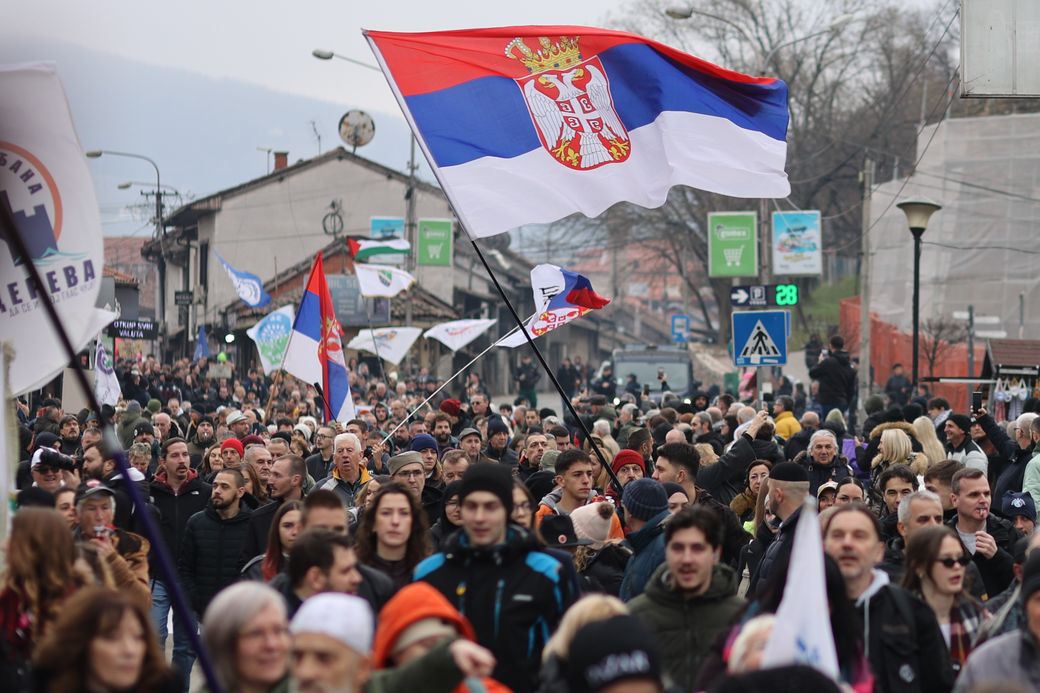
© Lazar Novaković
The so-called village walks did not fail to have an effect. Five months after the protests began, figures from CRTA, an organisation that promotes democracy and civic activism, showed that approximately 60% of the population supported the student protests.
The age of the students also plays a role in this. According to Subotić they are a very visible group: ‘If you attack them, everyone sees it. Their friends, parents and grandparents.’
The fight for a truly inclusive society
Not only did the gap between young and old narrow, but 26-year old Katarina Popović, junior journalist at European Youth Press, says that ‘the protests also brought young people from different communities together’.
Serbia used to be part of socialist Yugoslavia, where different ethno-religious communities lived together. This changed when the country broke up amid the wars in the 1990s. Orthodox Serbs, Catholic Croats and Muslim Bosniaks were diametrically opposed to each other.
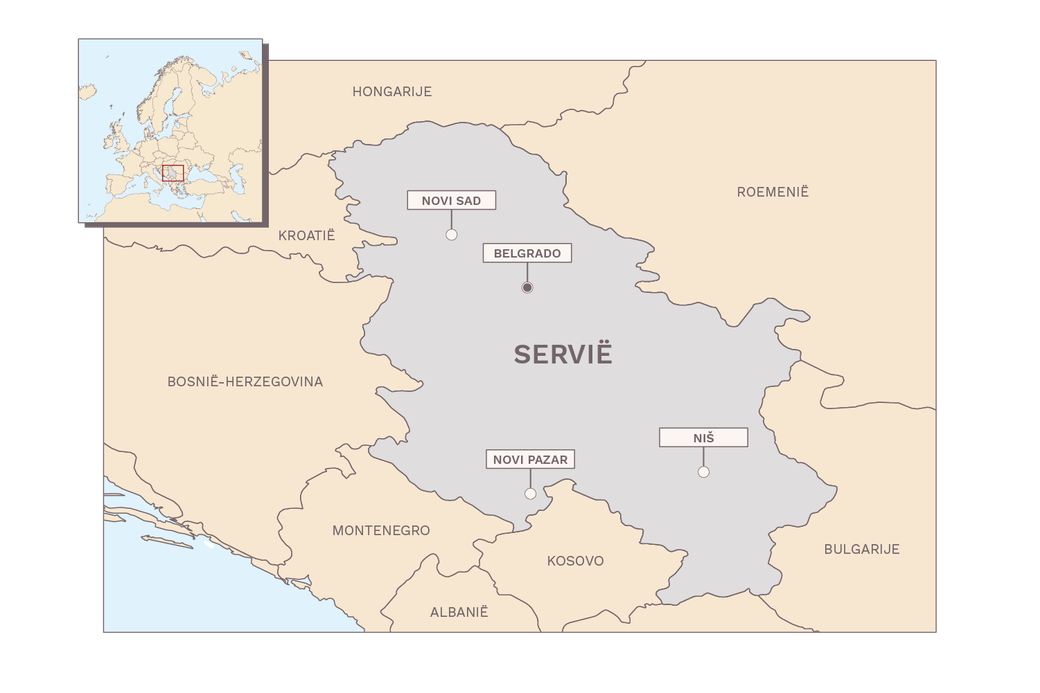
Today, Serbia is still a multi ethnic country. Various minorities live there, such as Hungarians, Croats and Albanians. The Sandžak, a region in south-western Serbia, is mainly inhabited by Bosniaks.
During Ramadan, students from the predominantly Muslim city of Novi Pazar travelled to the city of Niš to join in the protests. Orthodox students welcomed them with a festive halal meal. A few weeks later, Muslim students took over the occupation of the RTS building so that their Orthodox colleagues could celebrate Easter at home. ‘We embraced each other's cultures and traditions,’ Katarina says.
© Ferre Loeckx
Bjeloš explains that ethnic division is a political creation. ‘Promoting Serbian identity is an important part of Vučić’s politics. Politicians throughout the former Yugoslavia benefit from nationalism and therefore keep it alive. They do not allow people to truly live together, which isolates communities from one another.’
For many Orthodox Serbians, the protests in Novi Pazar were their first visit to the region. ‘Suddenly, people realised that diversity enriches our society and that we must work together to break through nationalism.’
‘That is the future we want’, confirms Katarina. ‘A country with room for every culture, with equal opportunities and where everyone is equal before the law.’
© Lazar Novaković
Reclaiming the national flag
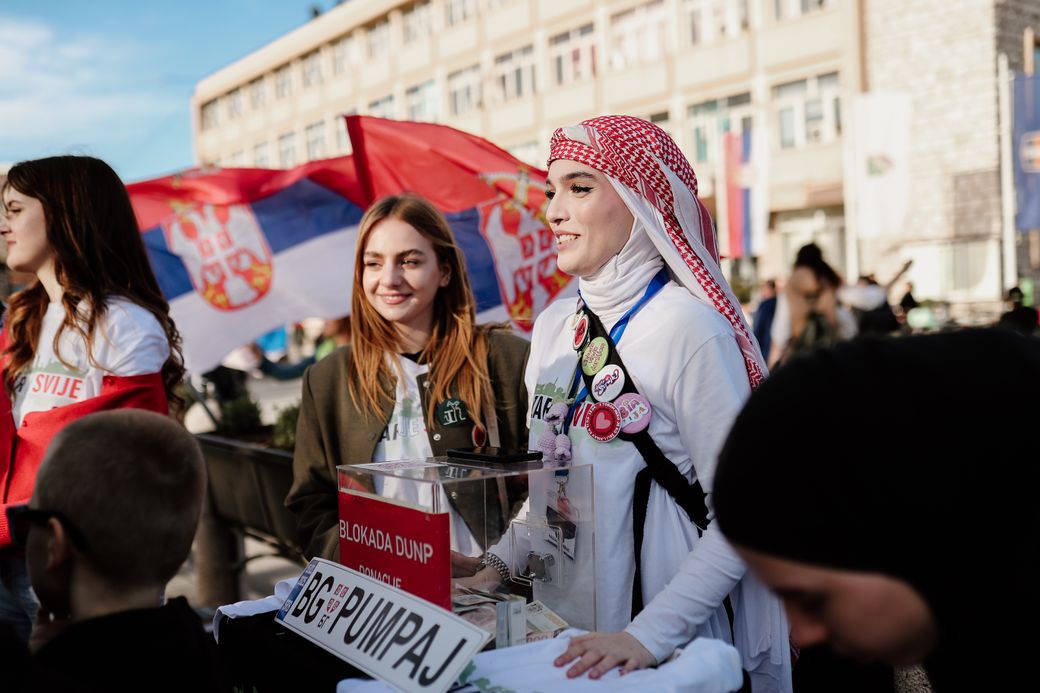
Redefining patriotism also involves redefining the Serbian flag. Since the Yugoslav Wars, it has been a symbol of war and Serbian nationalism.
Yet the flag is frequently waved at all demonstrations. ‘When I look at the flag now, I think of the students, their protest and their solidarity,’ Bjeloš says. It is even carried by Muslim students. According to Subotić, that was ‘unthinkable’ before the protests.
Milica recalls a politician saying that seeing a Muslim girl carrying the Serbian flag connects two things that may seem hard to reconcile given the country’s history. ‘It shows that she can love Serbia as much as any Christian can.’ She adds that she is glad Bosniak students are so actively involved in the movement.
By using the Serbian flag, they refute the argument that they are being controlled by foreign powers. On the contrary, they are protesting out of love for their homeland. They affirm that they are proud to live in Serbia and that they want to continue to do so.
‘The students have succeeded in redefining patriotism,’ explains Bjeloš. In this new definition, patriotism revolves around solidarity and love for each other. ‘You are patriotic when you clean up your rubbish or when you take care of each other.’
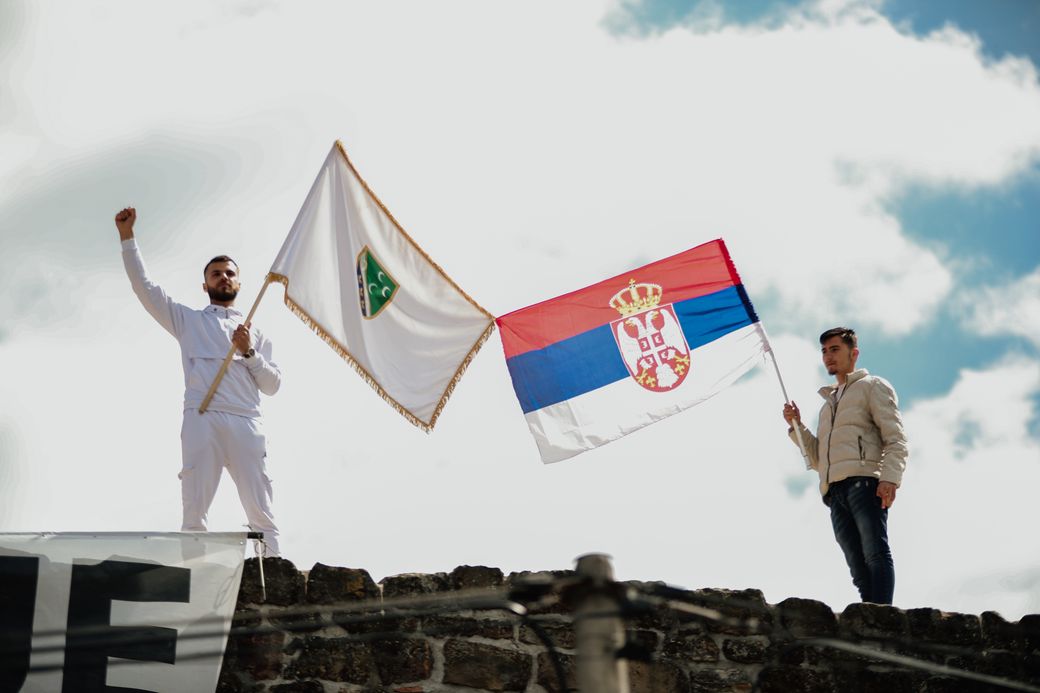
The flag of the Bosniaks from the Sandžak (left) flies alongside the Serbian flag.
© Lazar Novaković
Repression against protesters
The faculty occupations were lifted this summer. According to Milica, this was because a longer occupation would have a negative impact on the students’ future and because the ruling party SNS ‘doesn't care anyway’.
Over the summer, police violence against protesters escalated further. Videos where students were beaten brutally went online, students were unlawfully detained and at least one woman came forward after being threatened with rape by a police officer.
Serbia is witnessing police brutality. WORLD, WAKE UP! pic.twitter.com/7tQmUNrBMh
— FDU u blokadi (@sviublokade_fdu) August 16, 2025
Yet Milica emphasizes that the movement is still ‘very much alive and breathing’. This became clear during recent protests, including the on January 27 in Belgrade. Thousands of demonstrators protested against the suppression of education, as several teachers and professors were dismissed for their support of the student movement.
Looking ahead to 2027
The ongoing violence made students realize they had to politicize, despite their previous apolitical stance. Although Vučić has so far refused their demand for early elections, it won't be long now. New elections will be held as early as 2027.
According to Milica, the student movement is preparing to take part in the elections. She hopes the leaderless principle will remain intact. ‘The names on the list are people the students trust and who are experts in their respective fields, but none of them will be presented as a “leader”. If the law requires us to rank them, that will be nothing more than a formality.’
Recent local elections have given cause for hope. Student-endorsed lists received a large number of votes, challenging the SNS's almost complete dominance in rural areas. ‘But the problems with corruption at the ballot box have not changed,’ Milica notes. ‘We must remain aware of the fraud and prepare for it.’
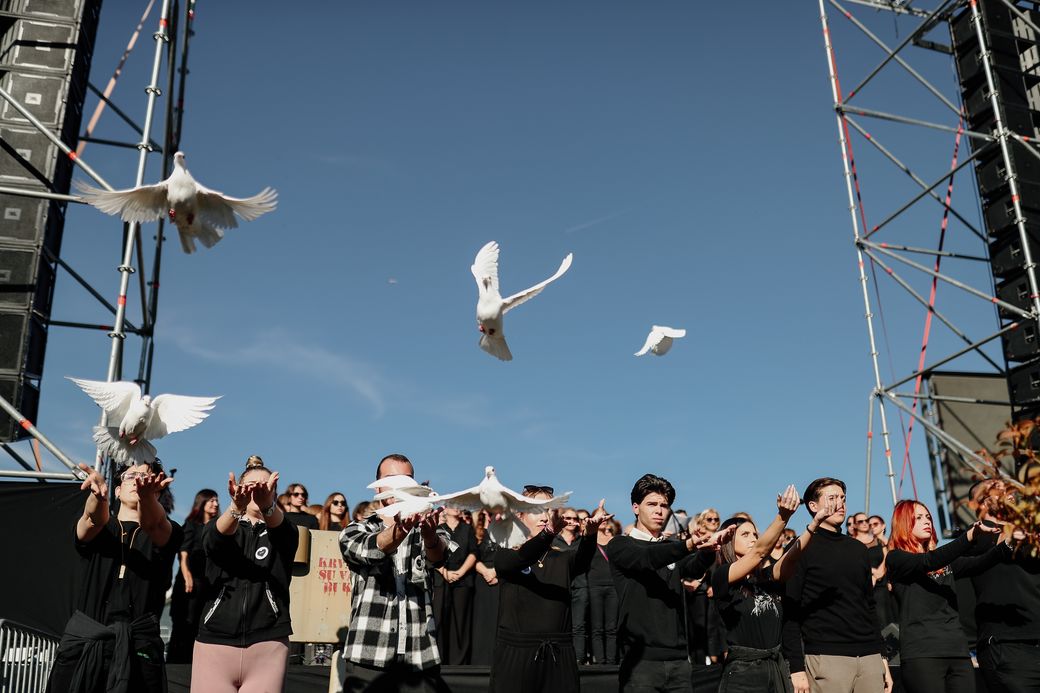
On 1 November 2025, a memorial service was held for the victims of the train accident in Novi Sad. In addition to sixteen minutes of silence, students also released white doves.
© Lazar Novaković
Hope for a better future
Although it remains to be seen whether the student movement will succeed in politically mobilizing society, Subotić wants to focus on the positive successes that the movement has already achieved. ‘They brought solidarity and optimism, two elements that were missing in our society.’
The protests also led to personal insights. In a country where an estimated eight out of ten young people are considering leaving, Katarina was no exception for a long time. ‘I have been protesting for years, but my hopes were repeatedly shattered. It felt logical to leave, when so many people are doing so.’
The protests changed that. ‘The solidarity on the streets touched me deeply. I feel a deep love for my culture and the people here again. For the first time, I see a real possibility for a better future, and I want to continue to be part of building it.’
Lees ook
Ontvang het beste van MO* rechtstreeks in je mailbox
Schrijf je nu in op onze gratis nieuwsbrieven en wij houden je op de hoogte van wat er gaande is in onze mondialiserende en snel veranderende wereld.
If you are proMO*...
Most of our work is published in Dutch, as a proMO* you will receive mainly Dutch content. That said we are constantly working to improve our translated work. You are always welcome to support us both as a proMO* or by supporting us with a donation. Want to know more? Contact us at promo@mo.be.
You help us grow and ensure that we can spread all our stories for free. You receive MO*Magazine and extra editions four times a year.
You are welcome at our events free of charge and have a chance to win free tickets for concerts, films, festivals and exhibitions.
You can enter into a dialogue with our journalists via a separate Facebook group.
Every month you receive a newsletter with a look behind the scenes.
You follow the authors and topics that interest you and you can keep the best articles for later.
Per month
€4,60
Pay monthly through domiciliation.
Meest gekozen
Per year
€60
Pay annually through domiciliation.
For a year
€65
Pay for one year.
Are you already proMO*
Then log in here